Data Collection
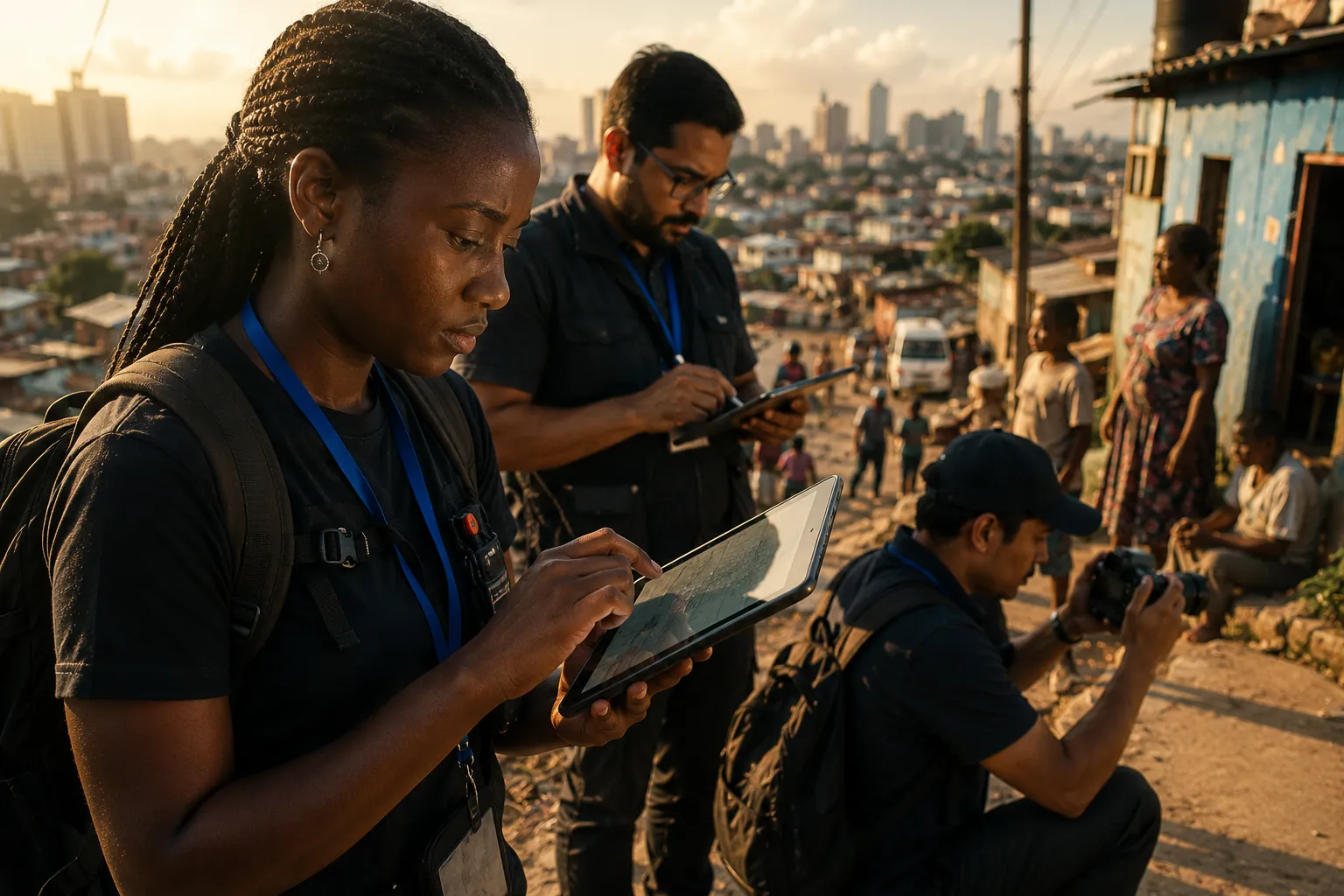
Corpshore AI collects field, sensor, audio, video, and physical-world data at scale using embedded local teams across 18+ countries, the real-world signal that models can only learn from data you actually go out and capture.
Scoped, staffed, and QA-gated
- Field, in-the-wild, and controlled-environment capture
- Image, video, audio, sensor, and LiDAR collection
- Demographic and geographic sampling to spec
- Consent, licensing, and provenance captured per asset
The problems this service addresses
Where teams use this work
Illustrative examples of how this service fits real programs. They are representative use cases, not named clients.
A ride-hailing app expanding into new cities
The app needs street-level imagery, signage, and driver-view video captured in the specific cities it is entering, across day, night, and weather conditions, so its routing and safety models recognize local road layouts rather than a generic proxy.
A retail-shelf vision team
A computer-vision team needs in-store photos of real shelves across store formats, lighting, and regions, with products arranged as they actually appear, to train stock and planogram detection that holds up outside a studio.
A voice assistant for an emerging market
A product team needs field-recorded speech in a low-resource language with the background noise and code-switching of everyday use, captured by people who live in the language, because no off-the-shelf dataset covers it.
A wearable-sensor health startup
A team needs synchronized sensor streams collected across a demographic sampling spec, with consent recorded per participant, so its activity-recognition model generalizes across body types and movement patterns.
From scope to delivery, end to end
Step through the stages of a data collection engagement.
1. Scope the capture spec
Define modality, volume, sampling distribution, target regions and languages, and the acceptance criteria each asset must clear before any team is deployed.
How the engagement runs
- It starts with a capture spec: modality, volume, sampling distribution, target regions and languages, and the acceptance criteria each asset must meet.
- Corpshore returns an indicative timeline and team plan before collection begins, so you can plan development around a known delivery.
- Embedded teams collect in-region to a written protocol, with device, framing, and metadata standards held constant.
- Incoming assets are sampled against the spec, and anything that misses is re-collected rather than patched, so the set stays clean from the source.
- You provide the sampling spec, any reference examples, and the schema your pipeline expects; Corpshore provides the people, infrastructure, consent handling, and delivery.
- Delivery is raw or pre-processed assets with metadata, consent, and provenance recorded per asset, in your ingestion format.
What doing this well requires
- The gap in most training sets is coverage, not volume; capturing the exact conditions a model will see beats buying more of the data it already has.
- Consent and provenance are cheapest to get right at capture. Reconstructing a chain of custody after the fact is where audits fail.
- In-the-wild and controlled capture solve different problems; the strongest programs blend real-world realism with repeatable controlled scenes.
- Native, in-region collectors surface the pronunciation, signage, and behavior that outsiders miss, which is why multilingual and regional data holds up in production.
- Owning the collection infrastructure means a missing slice can be re-collected on a predictable cadence rather than waiting on a marketplace to source it.
Every unit passes a three-tier QA cascade
Annotator + peer review
Trained in-region annotators label to a versioned taxonomy. Every unit gets a structured peer check before it moves.
Expert QA lead
Domain QA leads audit sampled and flagged work, resolve edge cases, and feed corrections back into annotator guidance.
Programmatic + consensus
Automated consistency checks, gold-set benchmarking, and consensus scoring gate the batch before delivery.
Data Collection, answered
Yes. With embedded teams across 18+ countries, Corpshore collects to a demographic, geographic, and linguistic sampling spec. You define the distribution you need across age, gender, region, device, or environment, and the embedded teams capture to that quota with consent and provenance recorded per asset.
Ready to scope a pilot?
Tell us your modality, volume, and languages. We'll return an indicative scope, timeline, and cost band.