Robotics & Embodied AI
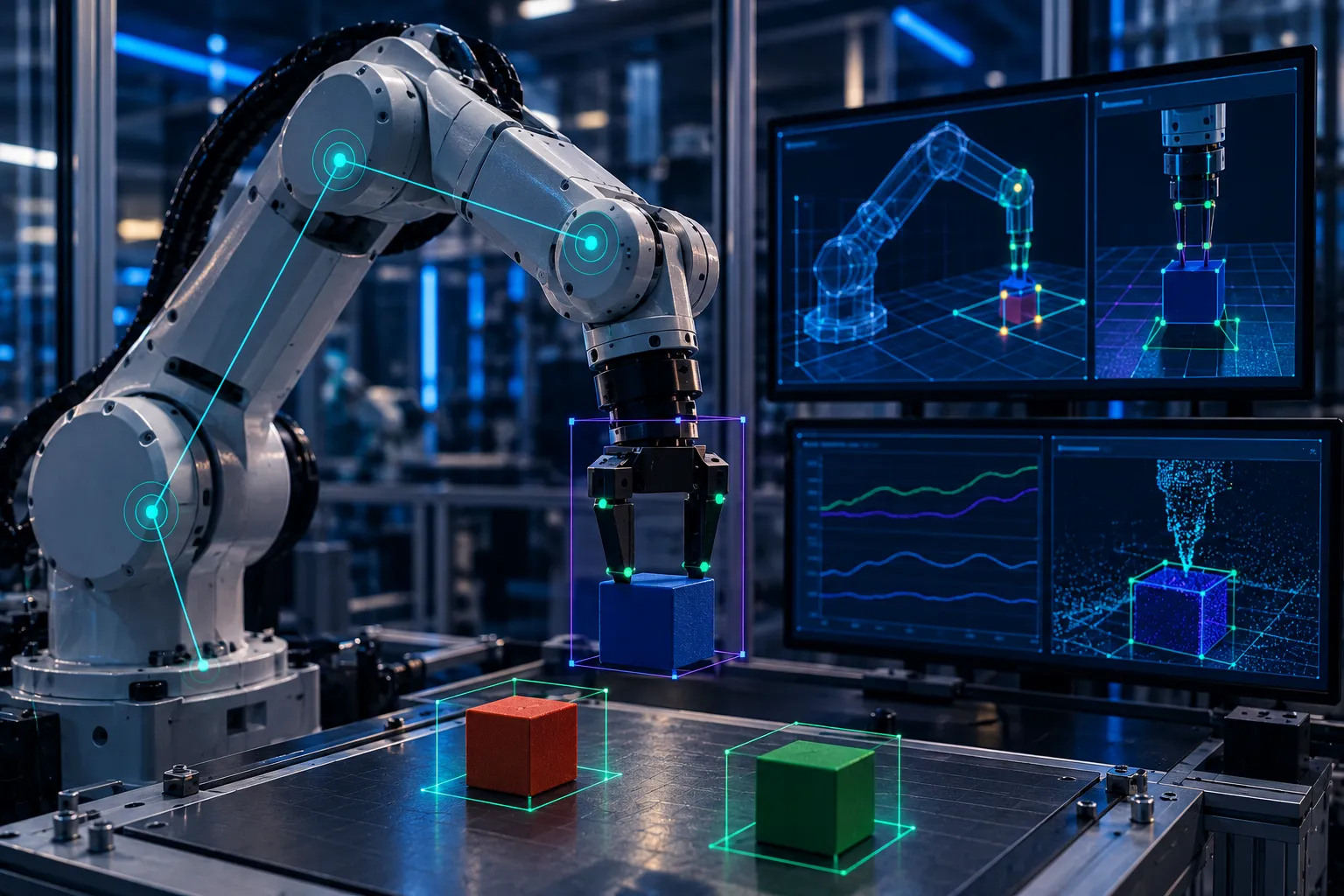
Corpshore AI captures robotics and embodied-AI training data, teleoperation, manipulation, real-world sensor and vision data for consumer and industrial robotics collected in controlled physical environments.
Scoped, staffed, and QA-gated
- Teleoperation and manipulation demonstrations
- Real-world sensor and vision capture
- 3D perception and grasp labeling
- Controlled physical-environment data collection
The problems this service addresses
Where teams use this work
Illustrative examples of how this service fits real programs. They are representative use cases, not named clients.
A home-robotics company teaching manipulation
A team needs teleoperation demonstrations of a manipulator performing household tasks across repeatable scenes, with synchronized sensor and vision streams, so its imitation-learning policy has clean examples to learn from.
An industrial-inspection robotics team
A team needs sensor and vision capture of manipulation and inspection tasks in a controlled setup, plus 3D perception and grasp labels, delivered under one SLA so labels match the raw data.
A warehouse-automation startup
A team needs grasp and pick demonstrations across object types, layouts, and lighting held constant across sessions, so the policy generalizes rather than overfitting to one arrangement.
A service-robot vision team
A team needs 3D perception labels on captured scenes, with fixtures and objects reproducible on demand, so edge-case scenarios can be re-run to expand coverage without rebuilding the setup.
From scope to delivery, end to end
Step through the stages of a robotics & embodied ai engagement.
1. Scope robot, task, and sensors
Define the robot, target tasks, sensor suite, and scenarios so the rig and modality mix match the policy rather than a generic setup.
How the engagement runs
- It starts by scoping the robot, task, sensors, and scenarios, so the rig and modality mix match the specific policy rather than a generic setup.
- Corpshore builds controlled scenes in owned physical space, including objects, layouts, lighting, and task scripts to your specification.
- Capture and labeling stay under one SLA, so perception labels match the raw sensor and vision data without a handoff gap.
- Sessions run to a written protocol covering sensor calibration, framing, and task steps, with per-session data checked against gold references.
- You provide the robot or task definition, sensor requirements, and scenario intent; Corpshore provides the space, operators, capture, and labeling.
- Because the environment is owned and repeatable, a scenario can be re-run to expand coverage without reconstructing the setup.
What doing this well requires
- Robotics policies learn from clean, repeatable demonstrations, so controlling the capture environment matters as much as the volume of data.
- Keeping capture and labeling under one operator removes the handoff gap that appears when perception labels are sourced separately from raw sensor streams.
- Owned physical space is the operator advantage in robotics, because a scenario can be reproduced on demand rather than waiting for one to occur.
- Consistent sensor calibration and framing across sessions is what lets a model see the same task the same way, which is the basis of generalization.
- Consumer and industrial robots need scenarios scoped to the specific robot and task, not a shared rig, so coverage reflects the real deployment.
Every unit passes a three-tier QA cascade
Annotator + peer review
Trained in-region annotators label to a versioned taxonomy. Every unit gets a structured peer check before it moves.
Expert QA lead
Domain QA leads audit sampled and flagged work, resolve edge cases, and feed corrections back into annotator guidance.
Programmatic + consensus
Automated consistency checks, gold-set benchmarking, and consensus scoring gate the batch before delivery.
Robotics & Embodied AI, answered
Teleoperation and manipulation demonstrations, real-world sensor and vision capture, 3D perception and grasp labeling, and controlled physical-environment data for consumer and industrial robotics. Programs cover both the demonstration data that teaches a policy and the labeled perception data that grounds it.
Ready to scope a pilot?
Tell us your modality, volume, and languages. We'll return an indicative scope, timeline, and cost band.