Speech & Audio
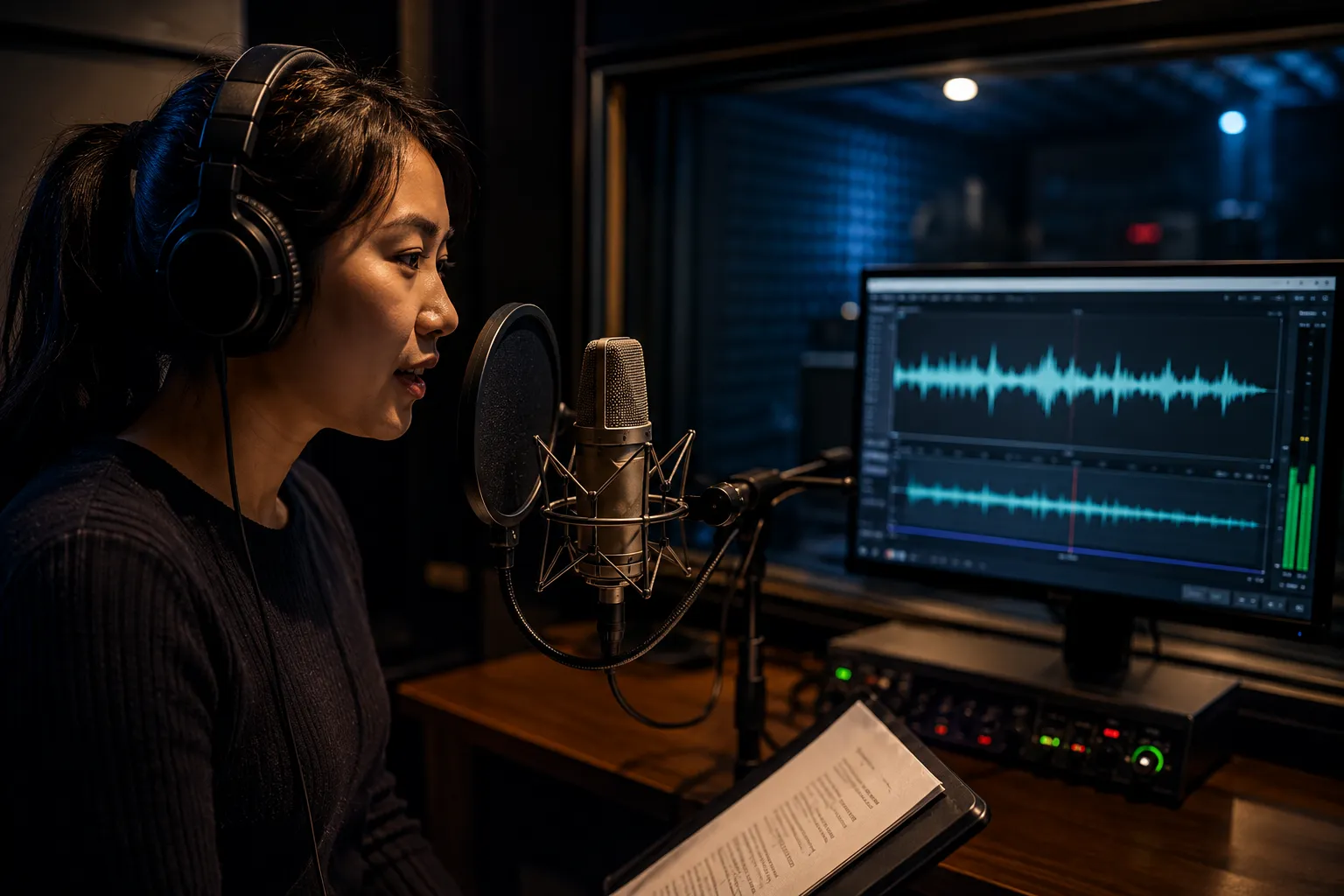
Corpshore AI builds speech and audio datasets for TTS and ASR across 35+ languages, including rare and low-resource languages, Swahili and Uzbek TTS datasets that reduced word error rate from 11.2% to 4.3%.
Scoped, staffed, and QA-gated
- TTS datasets with native, dialect-aware speakers
- ASR training data and transcription
- Code-switching and conversational speech
- Studio-grade and in-the-wild audio capture
The problems this service addresses
Where teams use this work
Illustrative examples of how this service fits real programs. They are representative use cases, not named clients.
A voice assistant entering East Africa and Central Asia
A speech team needs Swahili and Uzbek TTS and ASR data covering regional pronunciation and code-switching, recorded by native speakers, because English-first datasets drive an unshippable word error rate.
A call-center analytics product
A team needs in-the-wild conversational audio with diarization and timestamps across accents and background noise, so its transcription and analytics hold up on real calls rather than clean studio speech.
A navigation app adding local voices
A team needs studio-grade TTS recordings across dialect variants, so generated voices sound native to each region instead of a single flattened accent.
A media company transcribing an audio archive
A team has existing recordings but needs native speakers to produce accurate, dialect-aware transcripts with diarization and pronunciation labels for training and search.
From scope to delivery, end to end
Step through the stages of a speech & audio engagement.
1. Define the language and dialect spec
Set the target languages, dialect variants, and code-switch patterns to cover, and whether capture is studio-grade, in-the-wild, or both.
A live look at the work
Switch tabs to see how a labeling, preference, or transcription unit moves through the QA cascade.
How the engagement runs
- It starts with the target languages, dialects, and code-switch patterns to cover, plus whether capture is studio-grade, in-the-wild, or both.
- Native speakers are recruited in-region, who live in the language rather than diaspora or second-language voices.
- Recording follows a written spec with prompts designed to elicit regional pronunciation and natural code-switching.
- Every recording is transcribed and aligned by native speakers under the three-tier QA cascade before delivery.
- You provide the language and dialect targets, any script or domain requirements, and your training format; Corpshore provides speakers, studios, transcription, and QA.
- Improvement is validated on the exact target languages, so word error rate is measured on the markets the model needs to serve.
What doing this well requires
- The gap in non-English speech models is coverage of pronunciation and code-switching, which is exactly what English-first datasets omit.
- Building a dataset from capture through transcription keeps it clean at the source, rather than assembling it from mismatched third-party pieces.
- Native, in-region speakers are non-negotiable for dialect fidelity, because how a language is actually spoken rarely matches a studio approximation.
- Low-resource languages are where owned collection matters most, because usable off-the-shelf data barely exists to buy.
- Blending studio-grade and in-the-wild audio lets a model generalize from clean speech to the noise and overlap production systems encounter.
Every unit passes a three-tier QA cascade
Annotator + peer review
Trained in-region annotators label to a versioned taxonomy. Every unit gets a structured peer check before it moves.
Expert QA lead
Domain QA leads audit sampled and flagged work, resolve edge cases, and feed corrections back into annotator guidance.
Programmatic + consensus
Automated consistency checks, gold-set benchmarking, and consensus scoring gate the batch before delivery.
Speech & Audio, answered
35+ languages, including rare and low-resource ones, recorded by native speakers who capture regional dialect and natural code-switching. Because the speakers live in the language, the data reflects real pronunciation and mixed-language speech rather than a studio approximation of it.
Ready to scope a pilot?
Tell us your modality, volume, and languages. We'll return an indicative scope, timeline, and cost band.