Embodied AI Training Data from Latin America: Robotics, Home AI, and Agent Training
How embodied AI developers and robotics companies source first-person egocentric data from LATAM environments to train home robots, industrial manipulators, and general-purpose AI agents.
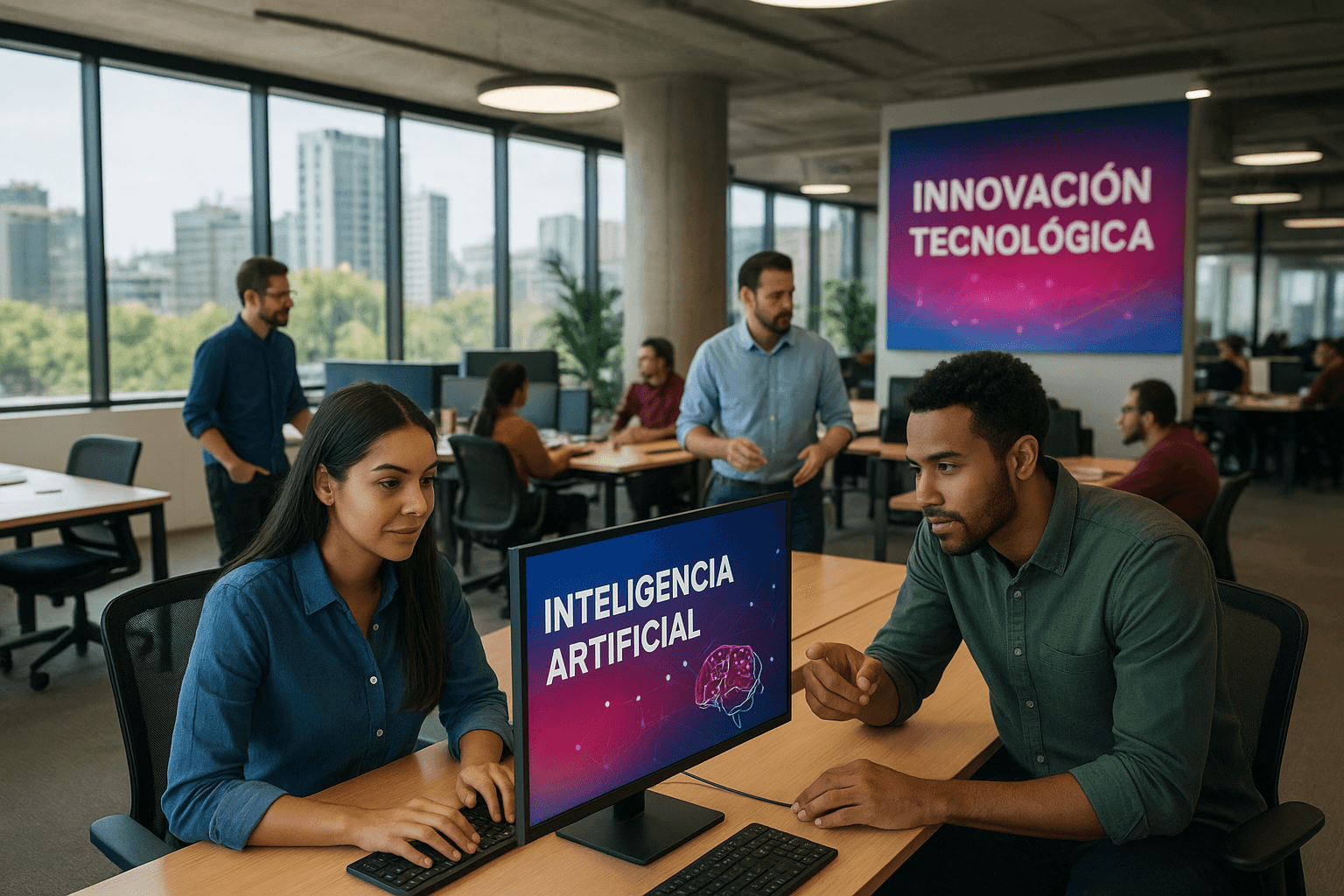
Latin America as a source of embodied AI training data
Embodied AI systems, including home robots, industrial manipulators, autonomous mobile robots, and general-purpose AI agents, learn to act in the world primarily from egocentric data: first-person video and sensor streams that capture how humans navigate spaces, manipulate objects, interact with other people, and complete tasks. The geographic and cultural diversity of this training data directly determines whether the resulting AI system can generalize to the full range of environments where it will be deployed.
Latin America is one of the most important and currently underserved sources of embodied AI training data. With 650 million people, 33 countries, and enormous environmental diversity from urban megacities to agricultural interiors, LATAM represents a large fraction of the environments where embodied AI systems will eventually be deployed. AI developers at major robotics labs and foundation model companies who train primarily on US and European egocentric data are building systems that will fail in LATAM deployment environments, not because of hardware limitations but because of training data gaps.
Corpshore AI addresses this gap through systematic egocentric data collection programs across LATAM that generate the diverse human demonstration data required to train generalizable embodied AI. Programs cover indoor home environments, commercial spaces, industrial facilities, outdoor agricultural and construction environments, and the mixed formal-informal spaces unique to LATAM urban environments.
Egocentric data modalities for embodied AI from LATAM
Video egocentric data, first-person RGB footage from smart glasses or helmet cameras, is the primary modality for embodied AI training. LATAM human demonstration data shows how people navigate spaces, pick up and place objects, use tools and appliances, interact with furniture and architecture, and complete daily tasks in the specific environmental configurations of LATAM homes, offices, and public spaces. This footage is annotated for action labels, object interactions, spatial relationships, and goal-oriented task segments.
IMU and motion sensor data from wrist-worn and body-worn devices complements video data by providing precise kinematic information about hand, arm, and body movements during task execution. For robotic manipulation training specifically, IMU data from LATAM workers performing assembly, packaging, cooking, and cleaning tasks provides the low-level kinematic ground truth that enables imitation learning systems to replicate human motion profiles.
Multimodal programs combining video, IMU, depth (from RealSense or Zed cameras), and audio capture provide the richest training signal for embodied AI systems. Corpshore AI supports multimodal collection programs across all LATAM environments, with annotation covering all modalities in a synchronized dataset format compatible with major embodied AI training frameworks including Open-X Embodiment, LEROBOT, and custom research pipelines.
Case scenarios: Embodied AI from LATAM training data
Home robot training data from LATAM: A robotics company developing a home assistance robot for global markets needs egocentric data from LATAM residential environments to ensure the robot can navigate LATAM kitchen layouts, recognize LATAM food products, and assist with the specific domestic tasks common in LATAM homes. Corpshore AI recruits contributors from target demographic groups in Brazil, Mexico, Colombia, and Argentina to generate home demonstration footage across a diverse sample of residential environments, annotated for object interaction and task completion.
Industrial manipulation from LATAM manufacturing: A company developing a flexible manufacturing robot for deployment in LATAM factories needs first-person demonstration footage of assembly workers at LATAM Tier 1 and Tier 2 manufacturers executing the specific assembly tasks the robot will perform. Corpshore AI coordinates data collection at compliant facilities in Monterrey, Sao Paulo, and Bogota, capturing hand and arm kinematic data alongside video, annotated for task steps and assembly quality states.
To commission LATAM embodied AI training data, visit https://corpshore.ai/start-a-pilot or contact https://corpshore.ai/contact. Corpshore AI supports standard embodied AI dataset formats and can deliver data compatible with your training pipeline.
Frequently asked questions
- Why does embodied AI need training data from Latin America?
- Embodied AI systems must generalize to all environments where they will be deployed. LATAM residential, commercial, and industrial environments differ from North American and European counterparts in layout, object configurations, and task patterns. Without LATAM-specific training data, embodied AI systems fail to generalize to LATAM deployments.
- What modalities does Corpshore AI collect for embodied AI training in LATAM?
- Corpshore AI supports RGB video (smart glasses, body cameras), IMU and motion sensor data, depth camera streams (RealSense, Zed), audio, and synchronized multimodal datasets. Custom hardware configurations are supported for research-grade programs.
- What annotation is available for embodied AI egocentric data from LATAM?
- Available annotations include action recognition and segmentation, object detection and 6-DOF pose, hand and body keypoints, task and subtask labeling, spatial relationship annotation, and goal state annotation. Custom annotation schemas for specific embodied AI training frameworks (Open-X, LEROBOT, etc.) are supported.
- Can Corpshore AI source embodied AI training data from specific LATAM demographic groups?
- Yes. Corpshore AI's contributor platform includes demographic targeting by age, gender, profession, and household type. For embodied AI training that needs to generalize across LATAM demographic diversity, programs can be designed to sample across target demographic segments.
- How large does an embodied AI egocentric dataset from LATAM need to be?
- Requirements vary by application: home manipulation tasks typically require 50 to 200 demonstrations per task per environment type; industrial assembly training requires 100 to 500 demonstrations per task. Contact https://corpshore.ai/contact to discuss requirements for your specific AI application.
Published by
Corpshore AI
https://corpshore.ai