European Robotics Surge Creates New AI Training Data Demand
European robotics companies raised more in H1 2026 than in the prior two years combined. Here is what this means for embodied AI training data programs across the EU.
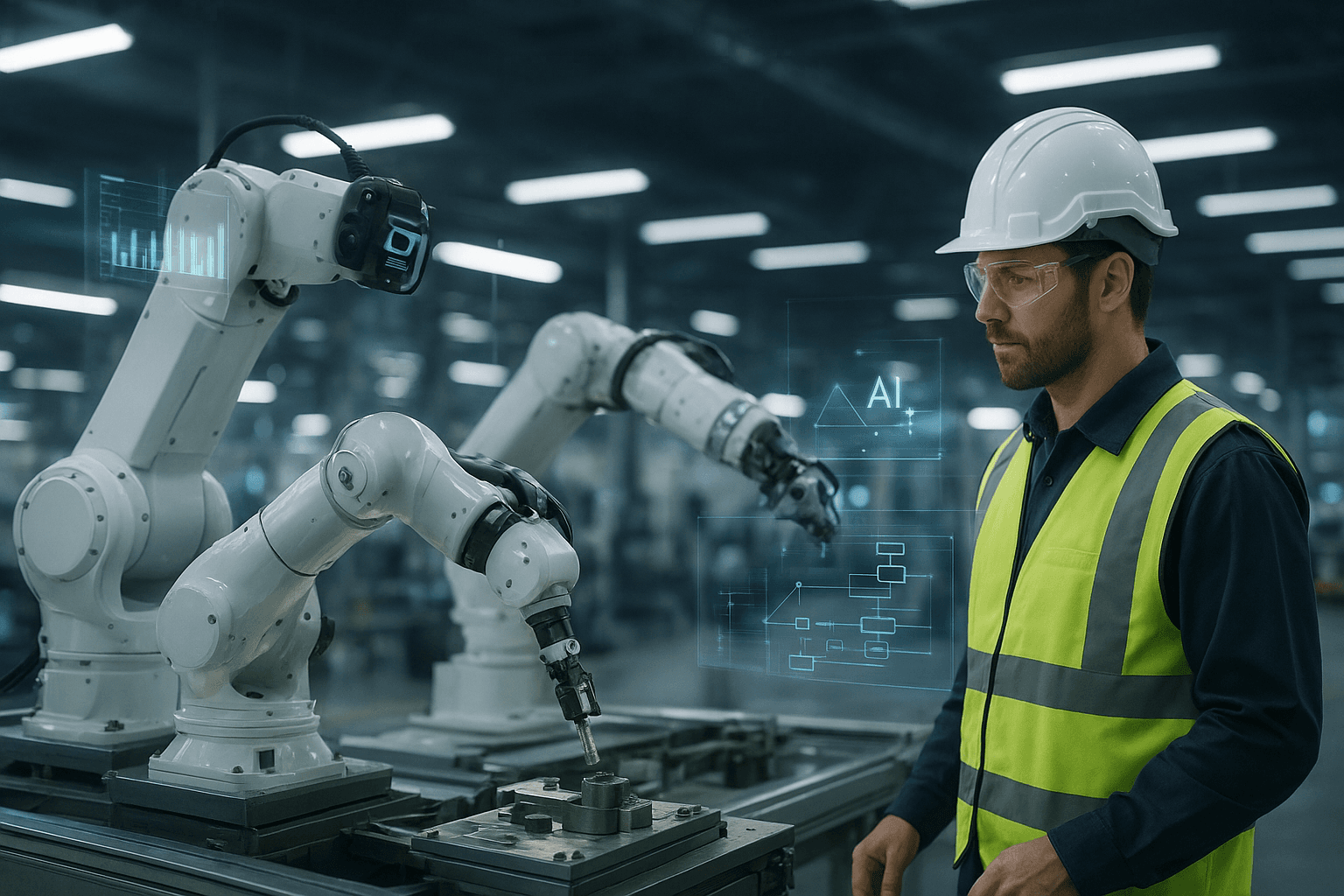
A Record Six Months for European Robotics Investment
European robotics companies raised more equity funding in the first half of 2026 than in the previous two years combined, according to data from Sifted and Dealroom. The headline deal was Neura Robotics, a Stuttgart-based humanoid robot developer, which closed a 1.2 billion euro Series C in March 2026. The round included participation from Bosch Ventures, the Volkswagen Group venture arm CARIAD, and London-based Balderton Capital. Neura Robotics is building general-purpose humanoids for factory floor applications, and its milestone raised the profile of European embodied AI significantly.
UK robotics companies raised 258 million dollars through the first eight months of 2026, a pace that puts the UK on track for its strongest robotics investment year on record. Notable rounds included a Series B for Dyson Robotics and two raises in the 20 to 30 million pound range for Oxford-based manipulation system startups. Globally, the robotics sector pulled in an estimated 55.8 billion dollars in 2026, roughly double the 2025 figure, with Europe accounting for an estimated 12 to 15 percent of deal volume by Dealroom data.
The investment surge is concentrated in four robotics application categories: humanoid and collaborative robots for manufacturing and logistics, agricultural automation, healthcare assistance robots, and construction and inspection drones. Each category has distinct training data requirements in terms of sensor modalities, environmental domains, and task hierarchies. The increase in funded startups translates directly into demand for structured AI training data programs.
Why Robotics Demands Specialized Training Data
Embodied AI systems require training data that is qualitatively different from the text and image datasets used for large language models. Robot learning systems typically train on egocentric video from wrist and head-mounted cameras, paired with proprioceptive sensor readings, force feedback data, and structured task annotations. A single high-quality demonstration of a pick-and-place task might require 15 to 30 minutes of synchronized multi-modal capture, human-reviewed segmentation of task steps, and semantic labeling of objects, surfaces, and failure conditions. At the scale required for generalization, this translates into thousands of hours of annotated demonstrations.
European robotics developers face specific regional training data requirements that differ from US or Asian counterparts. European manufacturing environments have particular characteristics: CE-marked safety systems, specific conveyor and pallet dimensions common to German and Dutch logistics, EU-standard appliance form factors for household robotics, and GDPR constraints on capturing video in environments where workers are identifiable. Training data collected in US or East Asian factories does not transfer cleanly to European industrial settings because of these environmental differences.
Corpshore AI operates egocentric data collection programs across European industrial, commercial, and residential environments in Germany, the Netherlands, France, Poland, and the UK. Programs are GDPR-compliant from the outset, with consent architecture and data handling procedures aligned with Article 10 EU AI Act requirements. Contact Corpshore AI at corpshore.ai/start-a-pilot to scope a European embodied AI training data program.
The European Annotator Advantage
European robotics developers benefit from annotation pipelines staffed by people who understand European environmental and linguistic context. Labeling a German warehouse scene for a logistics robot requires annotators who can identify CE markings, recognize Euro pallet dimensions, and apply category hierarchies consistent with EN ISO equipment standards. Generic annotation pipelines using annotators unfamiliar with European industrial settings produce inconsistent labels that degrade model performance on European deployments.
Language context matters too. Healthcare assistance robots deployed in Germany, France, or the Netherlands need to understand regional speech patterns, dialect variations, and instruction phrasing specific to those healthcare systems. Multilingual annotation and speech transcription for European languages, including German, French, Dutch, Polish, Swedish, Norwegian, and Danish, requires annotators with native or near-native proficiency and domain knowledge of the relevant healthcare or industrial context. Generic crowdsourcing platforms rarely provide this level of regional depth.
Corpshore AI manages annotation programs in over 35 languages, with dedicated annotator pools covering all major European languages and regional dialects. The Jwuma platform, Corpshore AI annotation marketplace, operates in Germany, France, the Netherlands, Poland, and the UK, and provides ISO 27001-aligned data handling for programs with GDPR sensitivity. Programs are scoped and staffed within 5 to 7 business days.
Computer Vision Requirements Across European Robotics Sectors
Computer vision annotation is the dominant labeling task for European robotics training datasets. The required annotation types vary by sector. Manufacturing robots need 3D bounding box annotation for components and tools, instance segmentation for deformable parts, and failure mode labeling for defect detection training. Agricultural robots operating in German, Dutch, or French crop environments require semantic segmentation of field crops, disease and growth stage labeling, and multi-spectral image annotation from UAV and ground-level sensors. Construction site robots need scaffold and barrier detection annotation, worker safety equipment classification, and structural element recognition.
Video annotation is particularly time-intensive in robotics contexts. A typical egocentric video stream from a manipulation robot runs at 30 frames per second, and meaningful annotation density for contact-rich tasks like assembly or harvesting requires labeling keyframes at 2 to 5 Hz minimum. At a 10-hour recording per day, a single robot operating for 90 days of demonstration data collection generates approximately 32,400 annotatable frames at 2 Hz. Annotation throughput, quality control, and review processes for this scale require a dedicated annotation operation, not a generic tasking platform.
Corpshore AI has delivered over 2.4 million annotated video frames for European robotics clients across manufacturing, agriculture, and logistics, with average inter-annotator agreement scores above 0.88 across bounding box, segmentation, and keypoint annotation types. Reach out at corpshore.ai/start-a-pilot to discuss your video annotation requirements.
What European Robotics Developers Should Do Now
Robotics AI teams that are now funded and building training data programs face a common set of decisions. The first is whether to build an in-house annotation operation or use a specialist vendor. For teams with fewer than 50 engineers and ongoing data needs, in-house annotation is almost always more expensive per labeled frame than a specialist vendor at scale, and the opportunity cost of engineering time managing annotation quality control is high.
The second decision is where to collect demonstration data. Teams building for European deployments should prioritize collecting in the actual deployment environments: German automotive facilities, Dutch distribution centers, French healthcare settings. Data collected in US surrogate environments introduces domain shift that is difficult to measure until deployment and expensive to correct. Programs that build EU-environment data collection into the training pipeline from the outset reach production-quality robot performance faster.
The third decision is timing. European robotics funding rounds typically include a 12 to 18 month runway before a Series A or B technical milestone. Training data programs require 6 to 9 months of collection and annotation to reach the scale needed for generalization results. Starting data programs late in a funding cycle compresses the timeline for reaching milestones. Contact Corpshore AI at corpshore.ai/start-a-pilot to launch a European robotics training data program within 14 days.
Frequently asked questions
- How much did European robotics companies raise in H1 2026?
- European robotics companies raised more equity funding in the first half of 2026 than in the previous two years combined. The standout deal was Neura Robotics in Stuttgart, which closed a 1.2 billion euro Series C. UK robotics companies raised 258 million dollars through August 2026, per Sifted data.
- What types of training data do European robotics companies need?
- European robotics developers primarily need egocentric video annotation from robot-mounted cameras, 3D bounding box and segmentation annotation for objects and environments, force and proprioceptive sensor data labeling, and task-step annotations for imitation learning. Required annotation types vary by sector: manufacturing, agriculture, healthcare, and construction each have specific labeling schemas.
- Why does European training data matter for European robots specifically?
- European industrial and commercial environments have specific characteristics, including CE-marked equipment, Euro pallet dimensions, EU appliance standards, and GDPR constraints on video capture in workplaces, that differ from US or Asian environments. Training data collected outside Europe introduces domain shift that reduces robot performance in European deployments.
- What is embodied AI and how does it relate to robotics training data?
- Embodied AI refers to AI systems that learn from and interact with physical environments through robotic bodies. Training embodied AI requires demonstration data collected by robot or human operators in real environments, annotated with task steps, object identities, and failure conditions. It is substantially different from training language models on text.
- How long does a robotics training data program take to complete?
- A meaningful robotics training data program typically requires 6 to 9 months of data collection and annotation to reach the scale needed for generalization results. Programs with Corpshore AI are scoped and staffed within 5 to 7 business days. Collection timelines depend on the number of demonstration hours required, the annotation schema complexity, and the number of deployment environments covered.
Published by
Corpshore AI
https://corpshore.ai